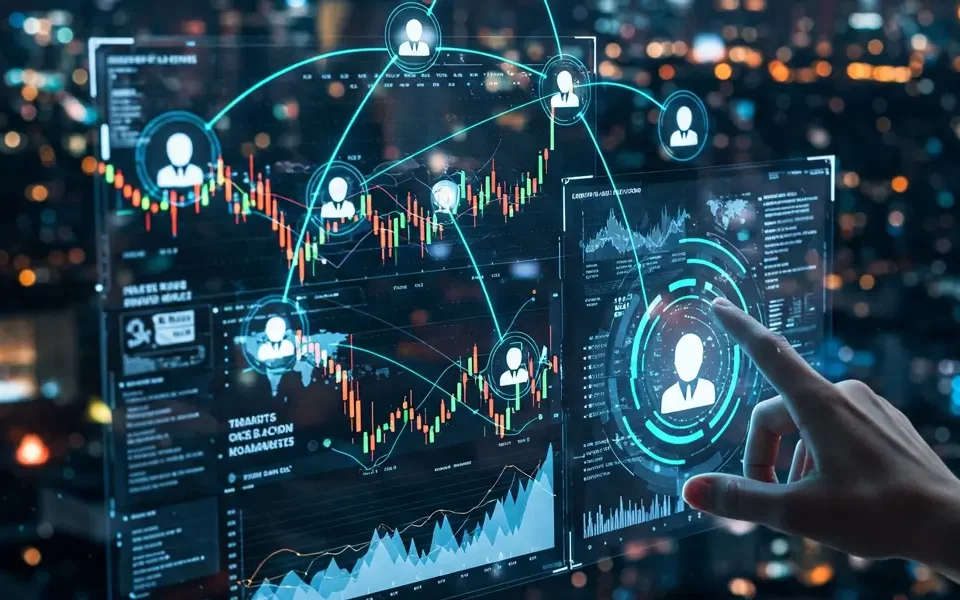

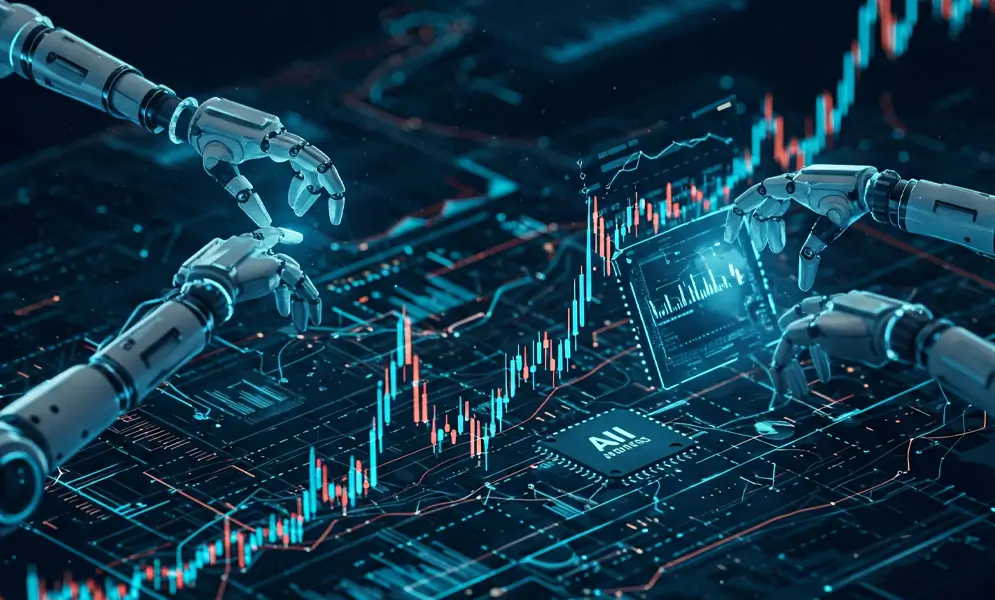
Market volatility is a crucial factor that influences trading decisions, often making or breaking investment portfolios. Traditionally, traders relied on fundamental and technical analysis to anticipate market movements. However, the rapid evolution of artificial intelligence (AI) has transformed how financial markets operate, providing traders with powerful tools to navigate uncertainties.
AI-driven trading strategies help investors make data-driven decisions by analyzing vast amounts of historical and real-time data. With predictive modeling, automated execution, and risk management capabilities, AI tools have reshaped how traders respond to market volatility. This article explores AI’s role in financial markets, focusing on predictive analytics, algorithmic trading, and risk mitigation strategies.
The Role of AI in Understanding Market Volatility
Market volatility refers to the rate at which asset prices fluctuate over a given period. Several factors contribute to volatility, including macroeconomic events, geopolitical tensions, and investor sentiment. Understanding volatility is essential for traders who seek to capitalize on market fluctuations while minimizing risks.
AI plays a critical role in identifying volatility trends by processing massive datasets and extracting meaningful insights. With machine learning algorithms, deep learning models, and natural language processing (NLP), AI can analyze past market behaviors to predict future price movements with greater accuracy than traditional methods.
How AI Enhances Market Analysis
AI’s ability to process real-time data and detect patterns helps traders gain an edge in volatile markets. Some key capabilities include:
- Pattern Recognition: AI identifies recurring price movements, making it easier to anticipate market shifts.
- Sentiment Analysis: NLP tools analyze financial news, reports, and social media to gauge investor sentiment.
- Real-Time Monitoring: AI continuously tracks market conditions and provides alerts for potential volatility spikes.
- Anomaly Detection: Machine learning algorithms detect irregular trading patterns, preventing potential market manipulations.
By leveraging these capabilities, traders can develop more strategic responses to market fluctuations, reducing emotional decision-making and enhancing profitability.
AI-Powered Predictive Analytics for Smarter Trading Decisions
Predictive analytics has emerged as one of AI’s most transformative applications in financial markets. By analyzing historical data, AI-driven models forecast price movements, helping traders make well-informed decisions.
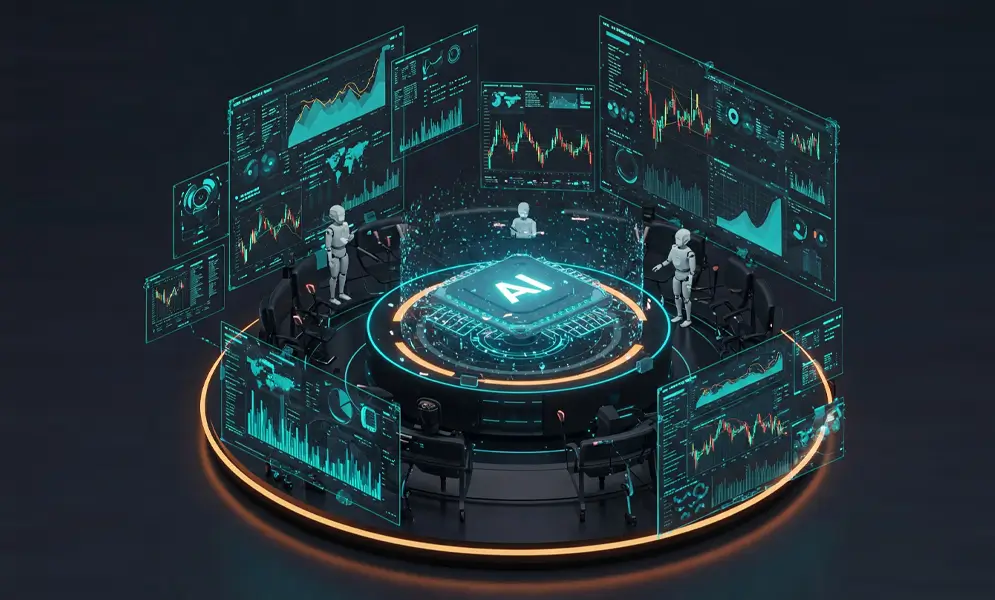
AI models use regression analysis, neural networks, and reinforcement learning techniques to refine their predictions. Over time, these models become more accurate, continuously adapting to changing market conditions.
Key AI Tools for Predictive Analytics
- Neural Networks: AI-powered neural networks detect complex market patterns that human traders might overlook.
- Regression Models: These models analyze past trading data to predict future asset prices.
- Volatility Indicators: AI-enhanced indicators, such as the AI-powered Volatility Index (VIX), assess market uncertainty.
- Reinforcement Learning: AI models learn from past trading outcomes, improving decision-making in dynamic markets.
Advantages of AI-Driven Market Predictions
- Increased Accuracy: AI models reduce human biases, offering more precise forecasts.
- Faster Decision-Making: AI processes data in real time, enabling traders to react instantly.
- Reduced Emotional Bias: Algorithmic decision-making minimizes irrational trading behaviors.
- Improved Portfolio Management: AI suggests asset allocations based on predicted market conditions.
As AI continues to evolve, predictive analytics will become an indispensable tool for traders looking to optimize their strategies in volatile markets.
Algorithmic Trading: Automating Strategies in Volatile Markets
Algorithmic trading, or algo trading, uses AI-driven algorithms to execute trades based on predefined conditions. By eliminating manual execution, traders can minimize errors and maximize efficiency.
High-frequency trading (HFT) is a subset of algorithmic trading that leverages AI to execute thousands of trades per second. AI algorithms analyze multiple data points, ensuring optimal execution timing to capitalize on short-term price fluctuations.
Benefits of AI-Driven Algorithmic Trading
- Speed & Efficiency: AI executes trades within milliseconds, outperforming human traders.
- Data-Driven Decisions: AI algorithms evaluate multiple market indicators simultaneously.
- Lower Transaction Costs: Automated execution reduces slippage and other trading expenses.
- Backtesting Capabilities: AI backtests strategies using historical data, optimizing trade execution.
How AI Enhances Algo Trading Performance
- Trend Analysis: AI identifies bullish or bearish trends, optimizing trade entry points.
- Market Liquidity Assessment: AI analyzes liquidity conditions to determine the best trade execution times.
- Arbitrage Opportunities: AI scans multiple exchanges for price discrepancies, executing profitable trades.
By automating trading strategies, AI eliminates emotional decision-making and enhances risk-adjusted returns, making it a preferred tool for both retail and institutional traders.
“AI-driven trading strategies are revolutionizing how investors navigate market volatility, turning uncertainty into opportunity.”
John Reynolds, AI Trading Expert
Risk Management with AI: Mitigating Losses in Uncertain Markets
Effective risk management is essential for traders navigating volatile markets. AI-driven risk mitigation strategies help traders identify and minimize potential losses.
By analyzing historical data and current market trends, AI models predict unfavorable market conditions, allowing traders to adjust their positions proactively. AI also detects anomalies that may indicate unexpected price crashes or manipulative activities.
AI Tools for Risk Mitigation
- Dynamic Stop-Loss Strategies: AI adjusts stop-loss levels based on real-time market conditions.
- Portfolio Diversification Models: AI optimizes asset allocation to reduce exposure to single assets.
- Anomaly Detection: Machine learning identifies fraudulent trading activities and unusual price movements.
AI’s Role in Enhancing Risk Control
- Volatility Analysis: AI calculates expected price swings, guiding traders in risk management.
- Scenario Modeling: AI simulates potential market conditions, helping traders prepare for uncertainty.
- Sentiment-Based Risk Assessment: AI evaluates market sentiment to anticipate sudden downturns.
By integrating AI-powered risk management tools, traders can minimize potential losses while maintaining profitability in unpredictable markets.
The Future of AI in Trading Strategies
AI’s integration into financial markets continues to evolve, with new advancements shaping the future of trading strategies. As AI models become more adaptive and self-learning, their predictive accuracy will significantly improve.
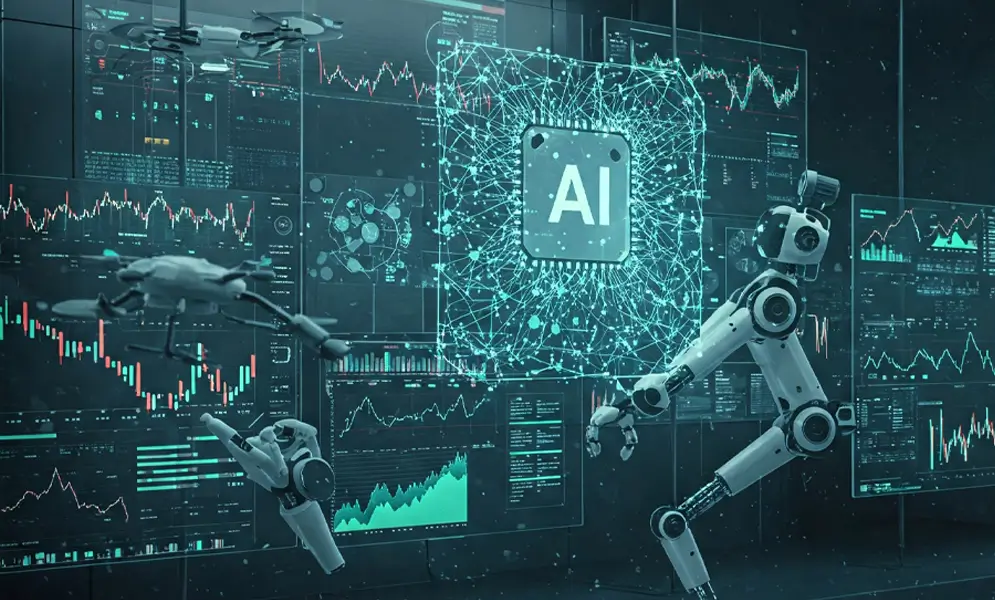
Emerging technologies, such as quantum computing and AI-powered blockchain analytics, will further enhance AI’s role in market analysis. These advancements will offer traders more sophisticated tools for making data-driven investment decisions.
Future Trends in AI-Powered Trading
- Quantum AI Trading: Quantum computing will accelerate AI’s ability to process massive trading datasets.
- Self-Learning Algorithms: AI models will autonomously refine their strategies based on evolving market trends.
- AI-Powered Robo-Advisors: Automated advisors will provide personalized investment recommendations.
- Blockchain Integration: AI will analyze blockchain transaction patterns to detect fraudulent activities.
How Traders Can Prepare for AI-Driven Markets
- Adopt AI Tools Early: Traders should integrate AI-driven platforms to stay competitive.
- Enhance Data Literacy: Understanding AI-powered analytics will be crucial for decision-making.
- Monitor Emerging Technologies: Keeping up with AI advancements will help traders adapt to market changes.
With AI’s continued growth, its impact on financial markets will become even more profound, redefining how trading strategies are developed and executed.
Conclusion
AI is reshaping the financial landscape by improving market analysis, predictive modeling, algorithmic trading, and risk management. By leveraging AI-driven tools, traders can make more informed decisions, optimize trade execution, and reduce risks associated with market volatility.
As AI technology advances, its role in trading strategies will become even more significant. Traders who integrate AI into their strategies will gain a competitive edge, benefiting from improved accuracy, efficiency, and profitability. Embracing AI-driven trading solutions is no longer optional—it is essential for success in modern financial markets.