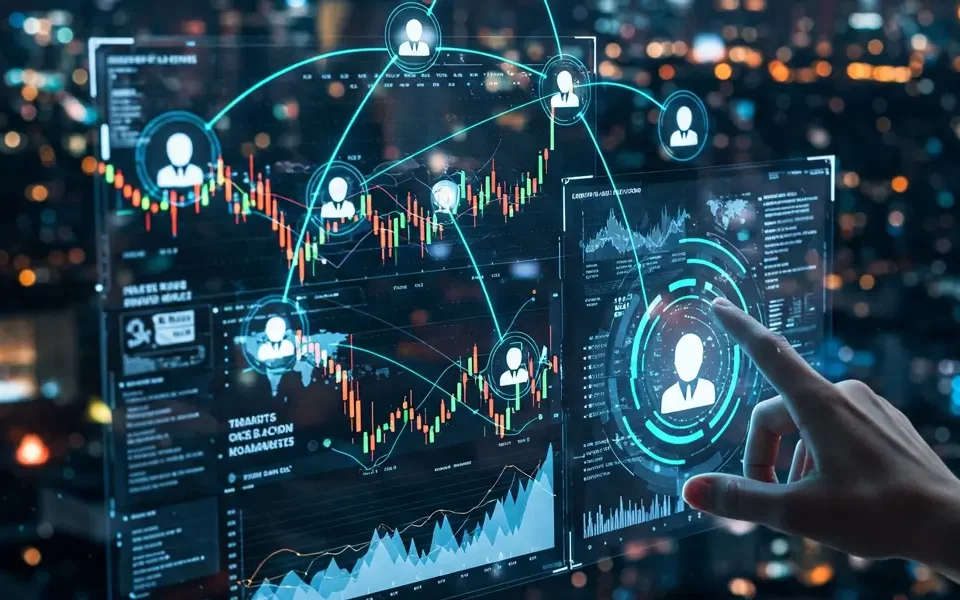


The financial trading industry has long struggled with issues related to transparency, data manipulation, and inefficient predictive models. Traditional trading systems often rely on centralized institutions that control market data, creating concerns about insider trading, security breaches, and lack of visibility. However, blockchain technology is changing the game by introducing decentralization, immutability, and real-time data tracking.
By leveraging blockchain’s transparent ledger and AI-driven predictive analytics, traders and investors can access accurate, tamper-proof data and make smarter, more informed trading decisions. This blog explores how blockchain is revolutionizing trading by enhancing transparency, predictive power, and overall efficiency in financial markets.
The Need for Transparency in Financial Trading
Transparency in financial markets is essential for fair trading practices, reducing fraud, and ensuring equal access to data. Traditional stock and commodity markets are often influenced by insider trading, data asymmetry, and regulatory loopholes, leading to unfair advantages for institutional investors over retail traders.
Blockchain solves this issue by offering a decentralized, immutable ledger that records every transaction in real-time, making it visible to all participants. This reduces the risks of data manipulation, enhances trust among traders, and fosters a fairer trading environment. With blockchain, all transactions are verifiable, reducing fraudulent activities and improving overall market integrity.
Key Challenges of Traditional Trading Transparency
- Insider Trading – Large investors often manipulate stock prices with privileged information.
- Data Manipulation – Centralized entities can alter financial reports.
- Security Risks – Cyberattacks can compromise trading platforms.
- Regulatory Gaps – Inconsistent regulations across global markets.
How Blockchain Enhances Transparency in Trading
Blockchain brings unprecedented transparency to trading by offering real-time, decentralized transaction tracking. In traditional trading, brokers and financial institutions act as intermediaries, controlling access to critical market data. With blockchain, every transaction is recorded on an open-source ledger, eliminating the need for intermediaries and ensuring direct, peer-to-peer trading.

Smart contracts further enhance transparency by automating trades based on predefined rules, reducing human interference and the risk of manipulation. For example, if a stock reaches a certain price level, a smart contract can execute a trade automatically, ensuring a fair and unbiased transaction process.
Benefits of Blockchain in Trading Transparency
- Decentralization – No single entity controls the market data.
- Real-Time Transactions – Immediate updates visible to all participants.
- Smart Contracts – Automates trades with pre-set conditions.
- Immutable Ledger – Ensures records cannot be altered or deleted.
Predictive Power of Blockchain in Trading
Predictive analytics is a crucial tool for traders who aim to anticipate market trends, identify patterns, and make informed investment decisions. Traditional predictive models often rely on limited, centralized data sources, leading to inaccurate forecasts and delayed responses.
With blockchain, traders have access to real-time, verifiable transaction data, allowing for more precise and data-driven predictions. AI-powered algorithms can analyze on-chain metrics, trading volumes, and investor behavior to generate predictive insights, helping traders capitalize on market opportunities faster than ever before.
How Blockchain Boosts Predictive Analytics
- On-Chain Data Analysis – Monitors real-time transactions for predictive insights.
- Decentralized Oracles – Fetches reliable off-chain data for better forecasting.
- AI & Machine Learning – Analyzes blockchain trends to anticipate price movements.
- Enhanced Risk Management – Predicts market downturns and prevents financial losses.
“Blockchain’s impact on trading extends beyond security and transparency—it is revolutionizing how predictive models operate by providing real-time, verifiable data. The future of trading belongs to those who embrace decentralized intelligence.”
Michael Thornton, Financial Tech Analyst
Real-World Applications of Blockchain in Trading
Blockchain is already transforming financial markets, with major trading firms, hedge funds, and stock exchanges integrating distributed ledger technology (DLT) into their operations. Companies like NASDAQ and the Australian Securities Exchange (ASX) are using blockchain for trade settlement and clearing, reducing inefficiencies and ensuring faster transactions.
Decentralized finance (DeFi) platforms are also leveraging blockchain-based trading systems to offer trustless, peer-to-peer financial transactions. These platforms eliminate intermediaries and allow users to trade assets securely, transparently, and cost-effectively.
Industries Adopting Blockchain for Trading
- Stock Exchanges – NASDAQ & ASX use blockchain for clearing trades.
- Crypto Markets – Binance & Coinbase integrate real-time blockchain analytics.
- Hedge Funds – Use blockchain-based predictive models for investment strategies.
- DeFi Platforms – Enable trustless, decentralized trading.
Challenges and Future of Blockchain in Trading
Despite its potential, blockchain adoption in trading faces several challenges, including scalability issues, regulatory uncertainty, and integration complexities. Large-scale financial markets process millions of transactions per second, and current blockchain networks struggle to match this speed.
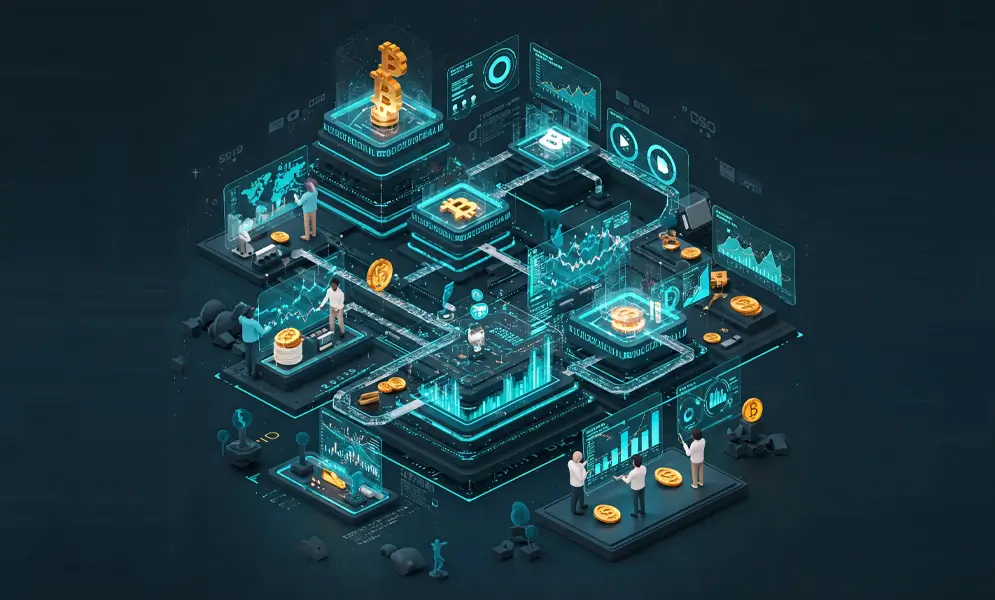
However, innovations such as layer-2 scaling solutions, quantum computing, and advanced consensus mechanisms are set to overcome these challenges. As regulations evolve and blockchain adoption grows, the future of trading will become more transparent, efficient, and predictive than ever before.
Challenges and Innovations
- Challenges:
- Scalability issues for high-frequency trading.
- Regulatory uncertainty in different regions.
- Integration difficulties with traditional financial systems.
- Volatility concerns in crypto-based trading.
- Future Innovations:
- Layer-2 Scaling – Enhances transaction speeds for large-volume trading.
- Quantum Computing – Processes predictive analytics at unmatched speeds.
- Decentralized Oracles – Provides secure real-world data integration.
- Interoperability Solutions – Connects blockchain with traditional financial markets.
Conclusion
Blockchain technology is reshaping financial trading by enhancing transparency, predictive analytics, and overall market efficiency. By eliminating intermediaries, offering tamper-proof records, and providing real-time insights, blockchain empowers traders with unprecedented access to reliable market data.
As AI-driven predictive models integrate with decentralized blockchain networks, trading strategies will become more sophisticated, secure, and efficient. With continuous advancements in smart contracts, decentralized exchanges, and machine learning, blockchain is set to redefine the future of trading across global markets.